
Mayan mythology explained for travelers
Understanding Mayan mythology transforms your journey through the Yucatan Peninsula from simple sightseeing into an an immersive cultural adventure. As you explore ancient ruins like Chichen Itza or float along the Sian Kaan lazy river, knowing the stories behind these sacred places enriches every moment. Best Maya Tours specializes in bringing these ancient narratives to life through expertly guided private tours that connect you with the spiritual heart of Mayan civilization.
The Sacred Universe of the Maya
The Maya conceived of a universe structured in three distinct levels, each teeming with supernatural beings and cosmic significance. The upperworld, known as the thirteen heavens, housed the celestial deities and ancestors. The middleworld represented our earthly realm where humans, animals, and nature spirits coexist. Below lay Xibalba, the underworld of nine levels ruled by death gods and populated by malevolent spirits.

This cosmological framework appears throughout Mayan archaeological sites across the Yucatan Peninsula. When you visit Chichen Itza on a private tour, the famous pyramid of Kukulcan represents this three-tiered universe. The structure’s 365 steps symbolize the solar year, while the serpent shadow that appears during equinoxes demonstrates the Maya’s sophisticated understanding of astronomical cycles.
The World Tree, or Yaxche, connected these cosmic realms, its roots extending into the underworld while its branches reached the heavens. This sacred ceiba tree remains central to Mayan spirituality today, and you’ll encounter modern Maya still performing ceremonies beneath these towering giants during multi-day tours through traditional communities.
The Maya believed that time moved in cycles, with creation and destruction repeating in endless patterns governed by the gods.
Essential Deities and Their Stories
Kukulcan, the feathered serpent deity, represents one of the most important figures in Mayan mythology. This god of wind, rain, and learning appears prominently at Chichen Itza, where the main pyramid bears his name. During private Chichen Itza tours, knowledgeable guides explain how this deity’s dual nature as both bird and serpent symbolized the connection between earth and sky.
Itzamna, the supreme creator god, ruled over the heavens and governed writing, learning, and the calendar. Ancient Maya depicted him as an aged man with a prominent nose, often shown creating the world through his words. His wife, Ixchel, goddess of the moon, pregnancy, and weaving, held particular significance for women. The island of Cozumel served as her primary pilgrimage destination, where Maya women traveled to seek her blessings.
The Hero Twins, Hunahpu and Xbalanque, star in the Maya creation epic known as the Popol Vuh. These divine brothers journeyed to Xibalba to challenge the death gods at the ball game, ultimately achieving victory through cleverness and sacrifice. Their story explains the creation of humans from corn and the establishment of the sun and moon. Many Mayan ruins feature ball courts where ritual games reenacted this cosmic struggle between life and death.
Chaac, the rain god, held crucial importance in the Yucatan Peninsula’s dry landscape. Maya depicted him with a long, curled nose and tears streaming down his face. During drought seasons, elaborate ceremonies honored Chaac to bring life-giving rains. The cenotes scattered throughout the region served as sacred portals to communicate with this vital deity.
The Corn God and Creation
The Maize God represented rebirth, beauty, and the cycle of agricultural seasons. Maya artistic traditions portrayed him as an eternally youthful figure with an elongated skull shaped like a corn cob. This deity’s death and resurrection paralleled the agricultural cycle, dying during the dry season and returning to life with the rains. Understanding this mythology adds profound meaning to visits to agricultural sites and traditional Maya communities during Yucatan Peninsula tours.
Sacred Animals and Their Symbolic Meanings
Mayan mythology assigns powerful spiritual significance to the region’s diverse wildlife, many of which you’ll encounter during eco-tours like the Sian Kaan lazy river tour. The jaguar, king of the underworld, symbolized night, death, and royal power. Maya rulers often took jaguar names and wore jaguar pelts to channel this fearsome predator’s strength. Archaeological sites throughout the Riviera Maya feature jaguar imagery in sculptures, murals, and architectural details.
The quetzal bird, with its brilliant green plumage and long tail feathers, represented the heavens and divine beauty. Maya nobility prized quetzal feathers above gold, using them to create elaborate headdresses for ceremonial occasions. The bird’s association with Kukulcan reinforced its sacred status, and killing a quetzal was forbidden except for religious purposes.
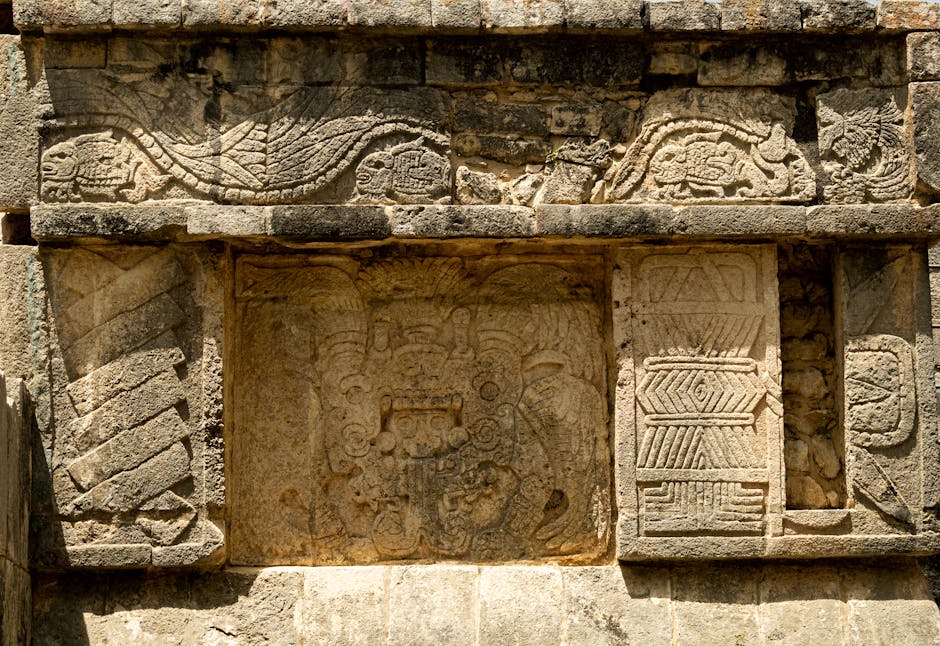
Serpents held complex symbolic meanings, representing both earth and sky, wisdom and danger. The rattlesnake’s ability to shed its skin symbolized renewal and transformation, while water serpents controlled rain and fertility. During private tours of Mayan ruins, you’ll notice serpent motifs carved into temples, ball courts, and ceremonial platforms throughout the Yucatan Peninsula.
Howler monkeys, abundant in the region’s jungles, served as scribes to the gods in Mayan belief. Their haunting calls at dawn and dusk marked the transition between day and night, making them guardians of time itself. The Maya associated these primates with the wind god and artistic creation, often depicting them in codices and temple decorations.
Creation Myths and the Popol Vuh
The Popol Vuh, or “Book of the Community,” preserves the Maya creation story and serves as the foundation for understanding their worldview. According to this sacred text, the gods attempted multiple creations before successfully forming humans from corn dough. The first beings were made from mud but dissolved in water. The second creation used wood, but these wooden people lacked souls and were destroyed by a great flood.

The Hero Twins’ adventures form the epic’s central narrative, culminating in their triumph over the lords of Xibalba through the sacred ball game. Their victory established the current cosmic order and enabled the successful fourth creation of humans from yellow and white corn. This story explains why corn holds such sacred significance in Mayan culture and continues to be central to traditional ceremonies you might witness during multi-day cultural tours.
The Popol Vuh also describes the World Tree’s planting at the center of creation, establishing the axis mundi that connects all cosmic realms. Many archaeological sites align with this cosmological model, positioning temples and plazas to mirror the mythological landscape described in the text.
These creation myths provide context for understanding Mayan architectural symbolism, religious practices, and artistic traditions. When exploring ruins during private Yucatan Peninsula tours, recognizing these mythological references transforms stone carvings and temple layouts into readable narratives about divine power, cosmic order, and human destiny.
Sacred Sites and Mythological Connections
Every major archaeological site in the Yucatan Peninsula connects to specific mythological narratives that guided their construction and use. Chichen Itza, meaning “at the mouth of the well of the Itza,” takes its name from the sacred cenote where Maya performed elaborate sacrificial ceremonies to honor Chaac and ensure agricultural prosperity. The site’s famous ball court recreated the cosmic game between the Hero Twins and the lords of death.
Tulum, perched dramatically on Caribbean cliffs, served as a beacon for Maya traders and a shrine to the diving god, often identified with the Venus deity. The site’s alignment with astronomical events reflects Maya belief in the interconnection between earthly activities and celestial cycles. During private tours of Tulum, you can observe how temple doorways frame significant star positions during important calendar dates.
The Sian Kaan Biosphere Reserve embodies the Maya concept of sacred landscape, where natural features hold spiritual significance. The lazy river tours through this pristine ecosystem reveal cenotes, lagoons, and ancient canal systems that the Maya considered portals to the spirit world. These sacred geographies demonstrate how mythology shaped practical landscape management and conservation practices.
Coba’s extensive network of stone roads, or sacbeob, connected various temple complexes according to mythological principles. These “white roads” symbolized the path of souls traveling between cosmic realms, while the site’s tall pyramid allowed priests to communicate with celestial deities from closer proximity to the heavens.
Modern Maya and Living Mythology
Contemporary Maya communities throughout the Yucatan Peninsula maintain active connections to ancestral mythologies, adapting ancient beliefs to modern contexts. During private tours that visit traditional villages, travelers witness ceremonies that invoke the same deities their ancestors honored over a millennium ago. Daykeepers still calculate auspicious dates using the ancient calendar, while shamans perform healing rituals based on mythological knowledge passed down through generations.
The annual Festival of Hanal Pixan demonstrates how Mayan mythology continues to structure community life. This Day of the Dead celebration honors ancestors according to traditional beliefs about the soul’s journey through the underworld. Families prepare elaborate altars with foods mentioned in ancient myths, maintaining spiritual connections across cosmic realms.
Agricultural practices throughout the region still follow mythological cycles, with farmers timing plantings according to Venus observations and rainfall ceremonies dedicated to Chaac. These living traditions provide travelers with opportunities to experience mythology as a dynamic, evolving cultural force rather than simply historical curiosity.
Best Maya Tours arranges respectful encounters with contemporary Maya communities, allowing visitors to understand how ancient mythologies continue shaping modern identity, environmental stewardship, and cultural continuity throughout the Riviera Maya region.
Conclusion
Understanding Mayan mythology transforms archaeological visits into profound cultural encounters that reveal the sophisticated worldview underlying one of humanity’s greatest civilizations. Whether you’re exploring Chichen Itza’s astronomical alignments, floating through Sian Kaan’s sacred waters, or discovering hidden cenotes during multi-day tours, these ancient stories provide the key to interpreting the spiritual landscape of the Yucatan Peninsula. Best Maya Tours specializes in connecting travelers with these deep cultural narratives through expertly guided private tours that honor both ancient wisdom and contemporary Maya traditions. Book your mythological journey today and discover how these timeless stories continue to shape one of Mexico’s most fascinating regions.


