
History of Mayan Pyramids Yucatan
The Yucatan Peninsula stands as one of the world’s most remarkable archaeological treasures, home to countless Mayan pyramids that tell the story of one of humanity’s greatest civilizations. These magnificent structures, built over millennia, represent not just architectural marvels but windows into a sophisticated culture that mastered astronomy, mathematics, and urban planning. From the towering heights of Chichen Itza’s El Castillo to the jungle-shrouded temples of Uxmal, the history of Mayan pyramids in Yucatan reveals a complex tapestry of religious devotion, political power, and scientific achievement that continues to captivate visitors and researchers alike in 2026.
The Origins and Early Development of Mayan Pyramid Construction
The Maya civilization began constructing pyramids in the Yucatan Peninsula around 600 BCE during the Pre-Classic period, though the most impressive structures were built during the Classic period (250-900 CE). These early pyramids evolved from simple platform mounds into complex multi-tiered structures that served multiple purposes within Mayan society.
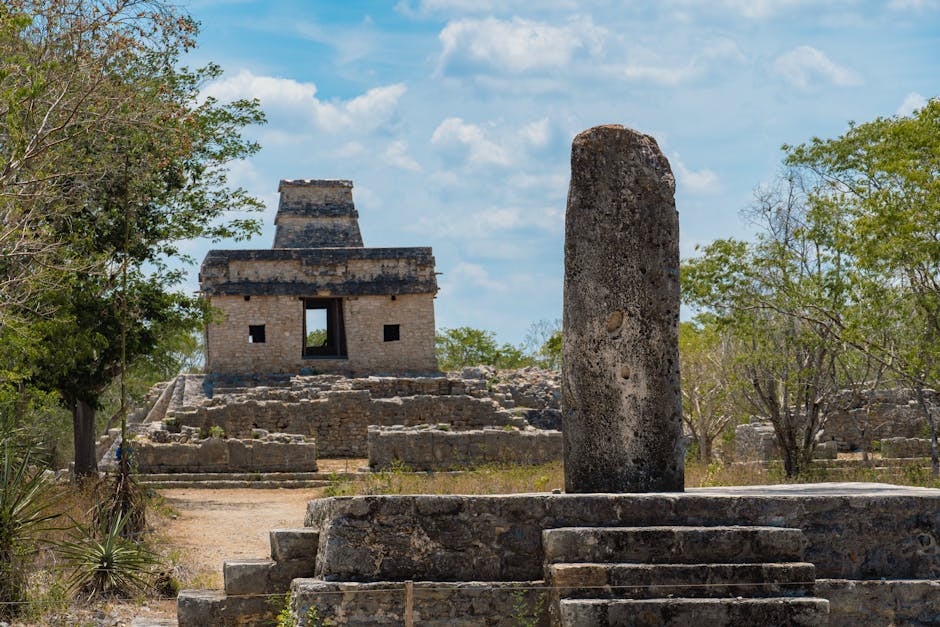
The construction techniques developed by the Maya were revolutionary for their time. Unlike Egyptian pyramids built primarily as tombs, Mayan pyramids in Yucatan served as temples, astronomical observatories, and ceremonial centers. The Maya perfected the use of limestone, abundant in the Yucatan, creating structures that could withstand both time and the harsh tropical climate.
Architectural Evolution Through the Centuries
Early Mayan pyramids were relatively simple structures, but as the civilization advanced, so did their architectural complexity. The Maya developed distinctive features including:
- Steep staircases leading to temple chambers at the summit
- Intricate stone carvings and hieroglyphic inscriptions
- Corbel arch construction techniques
- Precise astronomical alignments
- Multiple construction phases, with newer pyramids built over older ones
The builders employed sophisticated engineering methods, including the use of mortar made from crushed limestone and tree sap, creating structures that remain stable today. These techniques were passed down through generations of skilled artisans and engineers who dedicated their lives to perfecting their craft.
Major Pyramid Sites and Their Historical Significance
The Yucatan Peninsula hosts numerous pyramid sites, each with its own unique history and architectural characteristics. These sites showcase different periods of Mayan development and offer insights into the civilization’s evolution over time.
Chichen Itza: The Crown Jewel
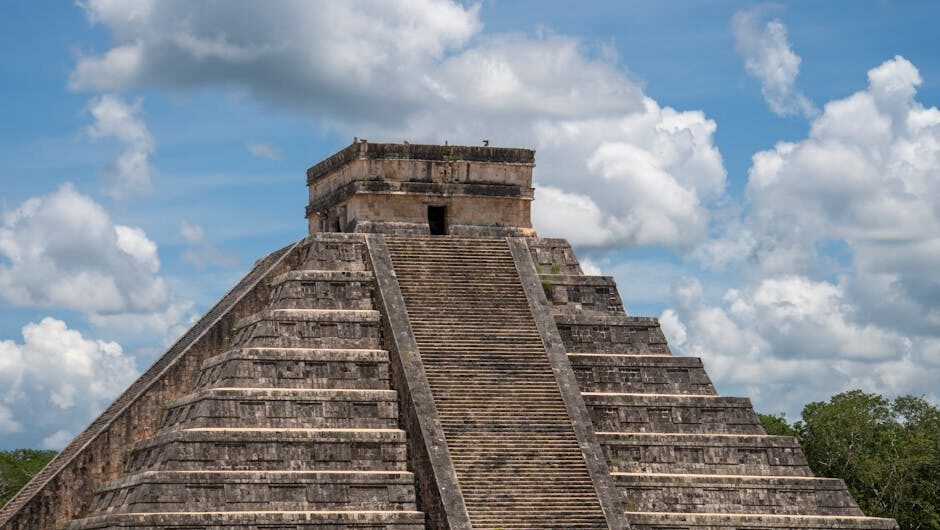
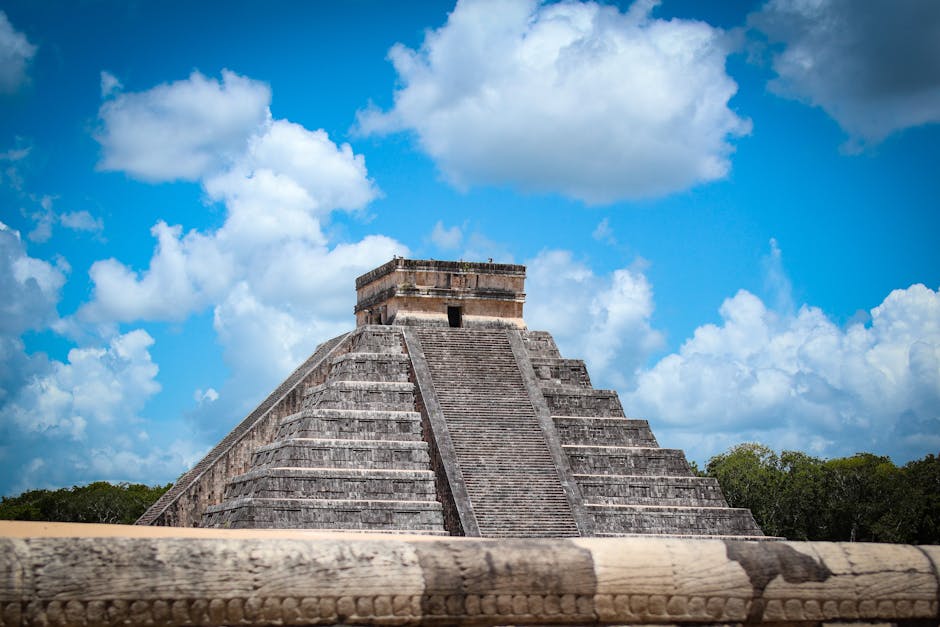
Chichen Itza, designated as a UNESCO World Heritage Site, represents the pinnacle of Mayan architectural achievement. The site’s most famous structure, El Castillo or the Pyramid of Kukulcan, stands 79 feet tall and demonstrates the Maya’s sophisticated understanding of astronomy and mathematics.
Built between 1000-1150 CE, El Castillo contains exactly 365 steps when including the top platform, corresponding to the solar year. During the spring and autumn equinoxes, shadows create the illusion of a serpent descending the pyramid’s northern staircase, showcasing the Maya’s precise astronomical knowledge.
Uxmal: The Puuc Architectural Style
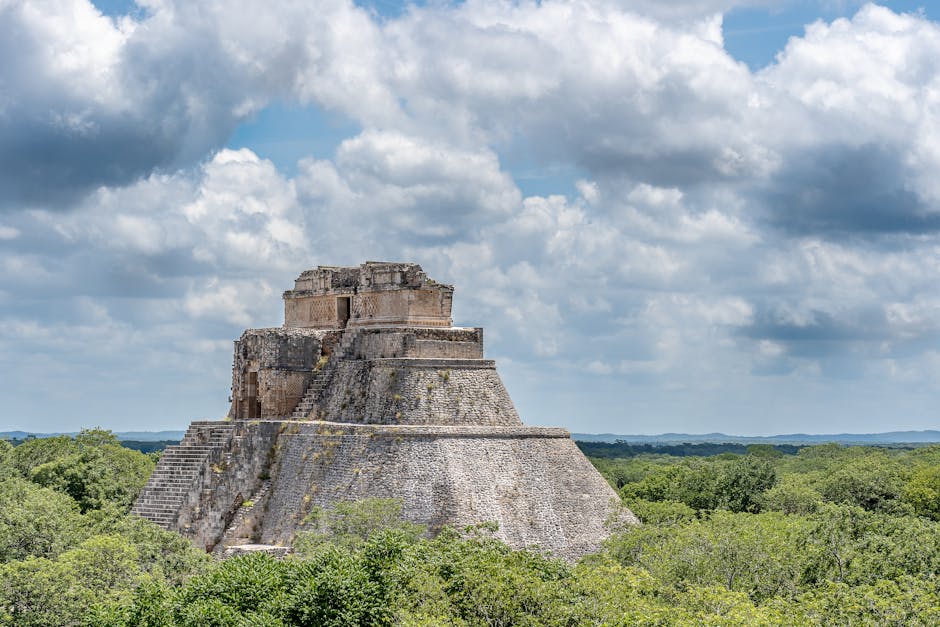
Uxmal, flourishing between 700-1000 CE, exemplifies the Puuc architectural style characteristic of western Yucatan. The Pyramid of the Magician, also known as the Pyramid of the Dwarf, stands as the site’s most distinctive structure. Unlike typical Mayan pyramids with four sides, this unique structure features rounded corners and an elliptical base.
The pyramid’s construction occurred in five distinct phases over several centuries, with each ruler adding new layers and modifications. The intricate stone mosaics and geometric patterns adorning the structure represent some of the finest examples of Mayan craftsmanship.
Coba: The Tallest Pyramid in Yucatan
Coba, active from 100-1500 CE, contains the Yucatan’s tallest pyramid, Nohoch Mul, reaching 138 feet in height. This site demonstrates the Maya’s ability to construct massive structures while integrating them seamlessly into the natural jungle environment. The pyramid’s 120 steps lead to a small temple at the summit, offering breathtaking views of the surrounding canopy.
Religious and Cultural Functions of Yucatan Pyramids
Mayan pyramids in Yucatan served multiple crucial functions within the civilization’s complex religious and social structure. These weren’t merely monuments to rulers but active centers of spiritual, political, and economic life.
Sacred Mountains and Cosmic Order
The Maya conceived their pyramids as sacred mountains connecting the earthly realm with the heavens and underworld. Each pyramid represented a microcosm of their universe, with the temple at the summit serving as the dwelling place of gods and the entrance to the celestial realm.
Elaborate ceremonies conducted atop these pyramids included bloodletting rituals, human sacrifices, and astronomical observations. Priests used the elevated positions to track celestial movements, creating accurate calendars that guided agricultural cycles and religious festivals.
Political and Social Centers
Pyramids also functioned as symbols of political power and social hierarchy. The size and grandeur of a city’s pyramids reflected the ruler’s authority and the community’s prosperity. Large plazas surrounding the pyramids served as gathering places for public ceremonies, markets, and political announcements.
The construction process itself reinforced social bonds and political allegiance. Thousands of workers participated in building projects that could span decades, creating shared identity and purpose within the community.
Construction Techniques and Engineering Marvels
The engineering prowess demonstrated in Mayan pyramid construction continues to amaze modern archaeologists and engineers. Without metal tools, wheels, or beasts of burden, the Maya created structures that rival contemporary engineering achievements.

Materials and Methods
Mayan builders primarily used limestone, quarried locally and shaped using stone tools. They developed a sophisticated understanding of load distribution, creating stable structures through careful planning and precise execution. The Maya employed a core-and-veneer construction method, filling the pyramid’s interior with rubble and capping it with carefully cut limestone blocks.
Water management systems integrated into pyramid complexes demonstrate advanced hydraulic engineering. The Maya created underground reservoirs, drainage systems, and catchment areas to collect and store rainwater, essential for supporting large urban populations in the often-arid Yucatan climate.
Astronomical Alignments and Mathematical Precision
Perhaps most remarkably, Mayan pyramids display precise astronomical alignments that required sophisticated mathematical calculations. Many structures align with cardinal directions, solstices, equinoxes, and the movements of Venus, the Moon, and other celestial bodies.
These alignments weren’t merely decorative but served practical purposes for agricultural timing, religious ceremonies, and calendar calculations. The Maya’s mathematical system, including the concept of zero, enabled these precise calculations centuries before similar developments in Europe.
Archaeological Discoveries and Modern Research
Contemporary archaeological research continues to unveil new insights about Mayan pyramid construction and purpose. Advanced technologies including LiDAR scanning, ground-penetrating radar, and 3D modeling reveal previously hidden structures and construction details.
Recent Technological Breakthroughs
In recent years, archaeologists have discovered numerous previously unknown structures beneath the jungle canopy using LiDAR technology. These discoveries suggest that Mayan civilization was far more extensive and sophisticated than previously understood, with complex urban networks connecting pyramid sites across the Yucatan Peninsula.
Carbon dating and other scientific methods continue to refine our understanding of construction timelines and cultural development. These studies reveal that pyramid construction often occurred in phases over centuries, with successive rulers modifying and expanding existing structures.
Conservation Efforts
Preserving these ancient structures for future generations presents ongoing challenges. Climate change, tourism pressure, and natural weathering threaten the integrity of Mayan pyramids. Conservation efforts focus on stabilization, protective treatments, and sustainable tourism practices that balance access with preservation.
International collaboration between Mexican authorities, UNESCO, and research institutions ensures that these invaluable cultural treasures receive proper protection and study. Digital documentation projects create detailed records that preserve structural information even as physical deterioration continues.
The Legacy and Modern Impact
The history of Mayan pyramids in Yucatan extends far beyond their ancient origins, influencing modern architecture, tourism, and cultural identity. These structures continue to inspire wonder and respect, serving as bridges between past and present.
Tourism to Yucatan pyramid sites contributes significantly to Mexico’s economy while raising awareness of Mayan cultural achievements. Responsible tourism practices help ensure that these sites remain accessible while protecting their integrity for future generations.
The pyramids also play crucial roles in contemporary Mayan communities, which maintain cultural connections to their ancestral heritage. Traditional ceremonies and cultural practices continue at many sites, demonstrating the living continuity of Mayan civilization.
Conclusion
The history of Mayan pyramids in Yucatan represents one of humanity’s greatest architectural and cultural achievements. These magnificent structures, built over millennia, showcase the Maya’s mastery of engineering, astronomy, mathematics, and art. From the iconic El Castillo at Chichen Itza to the towering Nohoch Mul at Coba, each pyramid tells a unique story of human ingenuity and spiritual devotion.
As we continue to study and preserve these remarkable monuments in 2026, they remind us of the sophistication and complexity of pre-Columbian civilizations. The Mayan pyramids of Yucatan stand not just as tourist attractions but as testament to human creativity and the enduring power of cultural heritage.
Experience the wonder of these ancient marvels firsthand with Best Maya Tours. Our expert guides bring the history of Mayan pyramids to life, offering immersive cultural experiences that connect you with this incredible civilization. Book your journey to discover the magic of Yucatan’s pyramid sites and create memories that will last a lifetime.


